A recent IDC survey confirmed what most of us in the defense industry already see: too many SMBs still handle cybersecurity reactively.
Something bad happens. Then they act.
That is not a strategy. And in the DoD supply chain, it is becoming a disqualifier.
The Problem Is Not Spending -- It Is Discipline
Here is what tends to happen inside a defense subcontractor's IT environment: security work sits inside general IT operations. Ownership is unclear. Processes exist on paper but nobody is accountable for them. Reviews happen after an incident instead of before one.
The assumption is that more spending solves it. Add another tool. Renew the antivirus. Expand the firewall.
But discipline is what creates security, not dollars. And that is exactly what CMMC is designed to force.
Not because CMMC equals security -- it does not, on its own. But because it requires organizations to do the things many would otherwise avoid: define ownership, document processes, assess risk regularly, monitor continuously, and demonstrate that controls are still working over time.
That is a different posture entirely from "we have an MSP."
The MSP Coverage Gap No One Talks About
Relying on a managed service provider for CMMC coverage is one of the most common and costly assumptions in the DIB.
MSPs can help -- often significantly. But what a standard MSP can honestly claim to cover is roughly 30 percent of the CMMC requirements a defense contractor actually needs to satisfy. The remaining 70 percent falls on the contractor: training programs, incident response planning and testing, vendor and supply chain risk management, policy ownership, and continuous monitoring with documented evidence.
Those are not IT tasks. They are business process tasks. And no MSP contract covers them unless someone specifically built a scope for them.
The contractors who find this out late -- usually during an assessment -- are the ones scrambling. They have been paying for managed services for years while assuming compliance was handled. It was not.
The Threat Environment Has Changed
A lot of smaller defense contractors still operate under the assumption that they are not a target. That thinking is outdated.
The attacks targeting the defense industrial base today are not manual. They are automated, scalable, and opportunistic. Threat actors do not need to specifically choose a 40-person defense subcontractor in Ohio -- they run campaigns against DoD contract holders at scale, looking for the ones with the weakest controls.
Phishing, social engineering, insider risk, vendor exposure, supply chain compromise -- these are not enterprise-only problems. They are SMB problems, and SMBs in the DIB are increasingly in scope.
The organizations that treat cybersecurity as a business function -- not an IT afterthought -- are the ones that will hold up when they are tested. And in the DoD world, the question is not whether you will be tested. It is whether you will pass.
CMMC as Competitive Advantage
Here is the shift that is already happening in the defense supply chain: CMMC is becoming a selection criterion, not just a compliance checkbox.
Prime contractors are starting to assess their subcontractor base. Contract vehicles are tightening requirements. Organizations that can demonstrate a mature security posture -- documented processes, defined ownership, continuous monitoring -- are going to be preferred partners.
Organizations that cannot will lose access to contracts they currently hold.
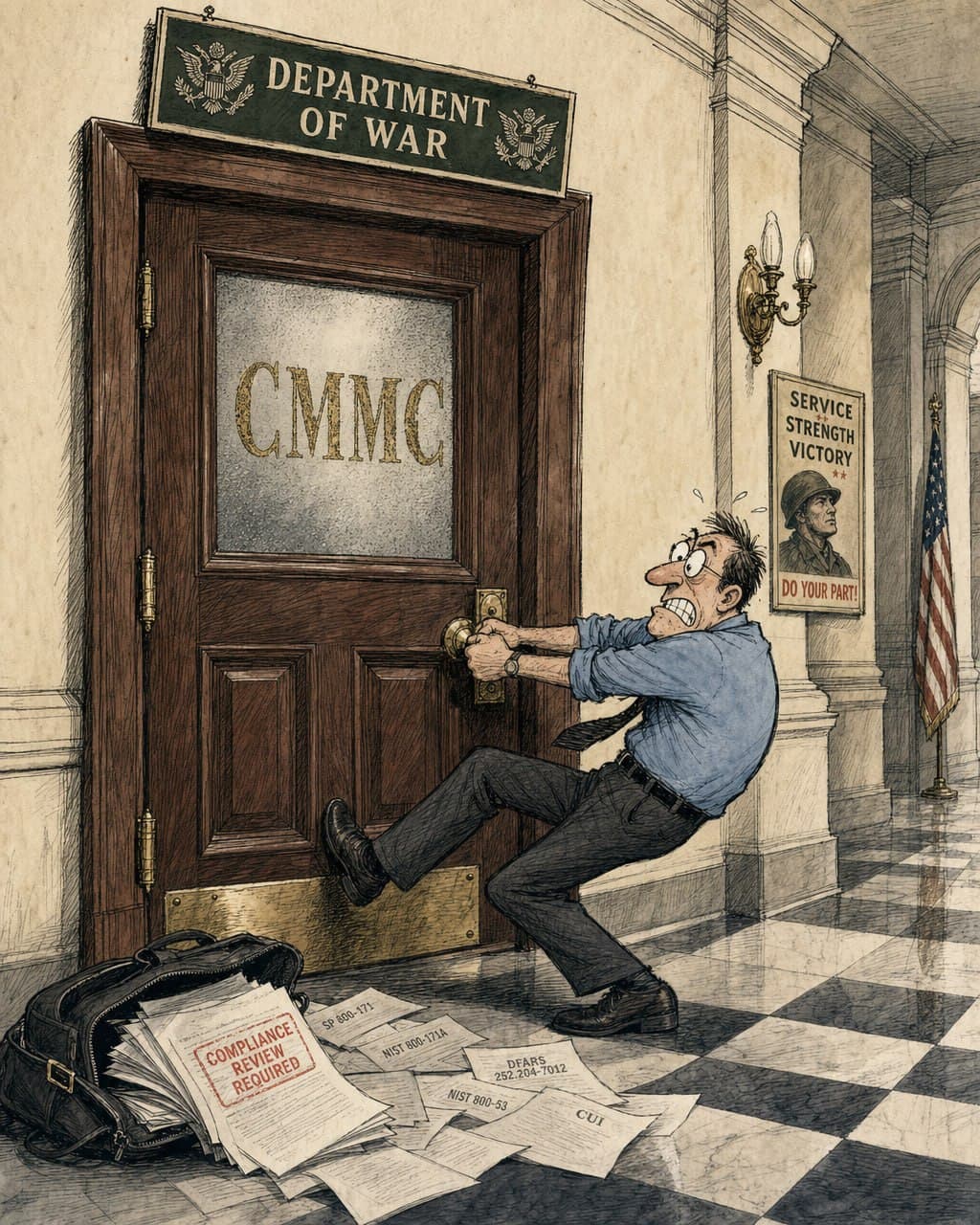
This is the door CMMC opens or closes.
The contractors who are building repeatable security processes now, assigning real ownership, and treating cybersecurity as part of the business are positioning themselves as the partners primes want to work with. The ones operating reactively are not.
Resilience does not mean never having a problem. It means detecting it fast, containing it, and recovering in a way that demonstrates control. That is what assessors look for. That is what primes will look for. And that discipline starts well before any assessment begins.
Where to Start
If you are a defense contractor trying to understand where you actually stand on CMMC requirements -- before any vendor conversation, before an assessment, before a contract deadline forces the issue -- the right first step is a baseline.
We built the CMMC Budget Calculator v2 at cmmc-planner.com to give contractors a defensible cost estimate based on their specific situation: contract types, current posture, headcount, and state. It takes about 10 minutes and outputs a Conservative/Likely/Aggressive range with a 5-year projection.
No signup. No sales call on the other end.
If you are past the budgeting stage and ready to understand your actual gaps, book a free CMMC readiness assessment with our team. We are one of 104 organizations DoD has authorized to perform CMMC assessments -- we do not do both assessment and remediation for the same client, by policy.
The door is open. Whether you walk through it prepared is the only variable you control.
BomberJacket Networks is a C3PAO (Certified Third-Party Assessment Organization) and SDVOSB based in Minnesota. We are one of 104 companies DoD has authorized to assess CMMC compliance.
Need Help with CMMC Compliance?
BomberJacket Networks is Minnesota's only C3PAO-authorized MSP with 25 years of expertise. Get a free consultation to assess your CMMC compliance readiness.