The Dangers of the Inbox: Why Email Is Still the #1 Entry Point for Cyberattacks

The Dangers of the Inbox: Why Email Is Still the #1 Entry Point for Cyberattacks
More than 99 percent of cyberattacks require human interaction to succeed. That stat comes from ProofPoint's research -- and it hasn't aged out. If anything, it's gotten more relevant as attackers have gotten better at psychology while most organizations' defenses have stayed flat.
Your inbox is not just a productivity tool. It's the most likely path an attacker will take to get inside your network.
This post covers the email-based threats your team faces right now, why they keep working, and what a realistic defense actually looks like.
Why Email Keeps Winning for Attackers
Cybercriminals are not just technically sophisticated -- they're psychologically sophisticated. Social engineering is the engine behind virtually every email-based attack. Attackers study how organizations communicate, mimic trusted senders, and time their campaigns around high-stress moments: tax season, mergers, end-of-quarter deadlines, HR open enrollment, anything that creates urgency and lowers judgment.
Google reported that 68 percent of phishing emails blocked by Gmail were new variations never seen before. That's not a coincidence -- it's intentional. Attackers rotate constantly to stay ahead of signature-based detection tools.
The takeaway: technology alone will not save you. Your people are both the target and the most critical layer of defense.
The Threats Hitting Your Inbox Right Now
Phishing, Spoofing, and Identity Deception
Phishing is the baseline. An attacker crafts an email that looks like it came from a trusted source -- your bank, Microsoft 365, a vendor, even a colleague -- and gets you to click a link or hand over credentials. Once you do, they're in.
Verizon's Data Breach Investigation Report found that 22 percent of all breaches involved phishing. A separate BullPhish study found that 18.6 percent of employees who clicked on simulated phishing emails willingly submitted credentials or requested sensitive data. Nearly one in five. That's not a technology failure -- it's a human one, and it's happening in organizations with security tools already deployed.
Business Email Compromise (BEC)
BEC attacks are targeted and financially devastating. An attacker compromises or spoofs a business email account -- often a CEO, CFO, or vendor contact -- and uses it to authorize fraudulent wire transfers or redirect payroll. GreatHorn reported BEC attacks grew by nearly 100 percent in a single year.
Spear phishing is the targeted variant: instead of casting a wide net, attackers research a specific individual or organization and craft a message designed for that one target. The more an attacker knows about your business, your vendors, and your personnel, the more convincing the attack. Small businesses are not too small to be worth targeting -- they're often easier to target because they have less scrutiny around financial approvals.
Account Takeovers
Once an attacker has valid credentials, they don't just read your email. They move laterally. They look for access to financial systems, HR platforms, cloud storage, and anything connected to your Microsoft 365 or Google Workspace environment. The 2020 Global Identity and Fraud Report found that 57 percent of enterprises reported higher fraud losses directly tied to account takeovers.
One compromised employee account is a master key. Account takeovers can cascade quietly -- an attacker sitting in a mailbox for weeks before doing anything visible, gathering intelligence, learning your payment processes, waiting for the right moment.
Malware Delivered via Email
CSO Online data puts it at 92 percent: that's the share of all malware delivered via email. One click on a malicious attachment or link is enough to plant a remote access trojan, keylogger, or backdoor on your network. From there, an attacker can move quietly for weeks or months before you see anything.
Modern malware is designed for persistence. It doesn't announce itself. By the time something triggers a visible alert, the attacker may already have everything they came for.
Ransomware
Ransomware is the threat that stops operations. An attacker encrypts your data and demands payment for the decryption key. In Q2 2020, the average ransom demand hit $178,254 -- a 60 percent jump from Q1 and a 432 percent increase from Q3 2019. That figure has only climbed since.
The threat has evolved further. Attackers now exfiltrate copies of your data before encrypting it, then threaten to publish or sell it if you don't pay. You're no longer just buying a decryption key -- you're paying to suppress a breach disclosure. Even if you pay, there's no guarantee the data doesn't surface later.
Backups help. But if your backup environment is connected to the same network, attackers can encrypt those too. Recovery planning has to account for isolated, tested backups.
Insider Threats
Verizon's research attributes over one-third of data breaches worldwide to internal actors. Most of these aren't malicious -- they're mistakes. An Egress study found that 31 percent of employees have accidentally sent email containing sensitive data to the wrong person.
Insider threats are hard to defend against with perimeter tools alone because the person already has access. The answer is layered: role-based access controls that limit what each user can reach, user behavior monitoring, and ongoing security awareness training -- not a one-time checkbox at onboarding.
Misconfigured Email Platforms
Misconfigurations are the silent risk. An improperly configured email server can allow unauthenticated sending -- meaning an attacker can send emails that appear to come from your own domain with no technical barrier. SPF, DKIM, and DMARC records are the foundation of email authentication, and a surprising number of organizations either have them wrong or missing entirely.
If your email platform isn't correctly configured, you're not just vulnerable to inbound attacks -- your domain can become a launching pad for attacks on your own customers and partners. That's a reputation problem on top of a security problem.
What a Real Defense Looks Like
A cyberattack occurs roughly every 39 seconds according to University of Maryland research. That pace doesn't leave room for a reactive posture. Here's what a layered email security program actually requires:
Email authentication -- SPF, DKIM, and DMARC configured correctly. This is the floor, not the ceiling.
Advanced email filtering -- Beyond basic spam filtering. Sandboxing, link rewriting, and attachment detonation to catch zero-day threats that signature tools miss.
Multi-factor authentication (MFA) -- Every email account, every user, no exceptions. MFA stops most credential-based account takeovers cold, even when a password is stolen.
Endpoint detection and response (EDR) -- Because some malware will get through. You need visibility on the endpoint to catch it fast and contain it before it spreads.
Dark Web monitoring -- Know when your employees' credentials have been compromised before an attacker uses them. Credential exposure on the dark web often precedes an account takeover by weeks.
Security awareness training -- Regular, simulated phishing campaigns with measurable results. Training that tests real behavior, not just completion rates.
Incident response plan -- Know in advance what you do when something gets through. Who gets called? What gets isolated? Who has authority to make decisions? Finding out in the middle of a breach is too late.
Ask yourself -- and ask your IT provider:
- Does your current MSP or IT provider have all of these protections in place for your organization? Can they show you proof?
- If any of these are missing, do you know what that gap is actually costing you in risk exposure right now?
- If adding these protections means a higher monthly investment, do you see the value relative to what a single breach would cost -- in downtime, lost revenue, recovery expenses, and client trust?
A good managed security provider should be able to answer all three questions clearly and on the spot. If they can't, that's worth knowing.
The Business Reality
Small and mid-sized businesses are not afterthoughts for attackers -- they're primary targets. They have less security staff, less scrutiny on financial approvals, and often share networks with sensitive client data. The financial and operational consequences of a breach hit harder relative to size.
Cyber insurance can help with recovery costs, but insurers are increasingly requiring documented controls before issuing policies or covering claims. The days of buying a policy and treating it as a substitute for security are over.
Bottom Line
Your inbox is the most attacked surface in your organization. The threats are sophisticated, patient, and financially motivated. The good news: a well-layered email security program with the right controls in place blocks the vast majority of these attacks before they land.
BomberJacket Networks has been helping businesses build security postures that hold up for over 25 years. If you're not sure where your current email security stands, that's worth finding out before an attacker does.
BomberJacket Networks is a managed security services provider and cybersecurity consultancy with over 25 years of experience serving SMBs and enterprise clients.
Related Resources
Free Ebooks & Guides
View All
Ransomware Survival Guide
Essential strategies and best practices to protect your business from ransomware attacks and recover quickly if compromised.
Download Free
All Businesses Should Adopt MFA. Now
Learn why multi-factor authentication is essential for business security and how to implement it across your organization to prevent account takeovers.
Download Free
Inside Threat
Understand and mitigate insider threats with strategies to protect your business from malicious employees, contractors, and accidental data breaches.
Download FreeVisual Guides & Infographics
View All
Cybersecurity Checklist for Data Security and Privacy
A comprehensive checklist to help protect your organization's sensitive data and maintain robust privacy practices.
Download Free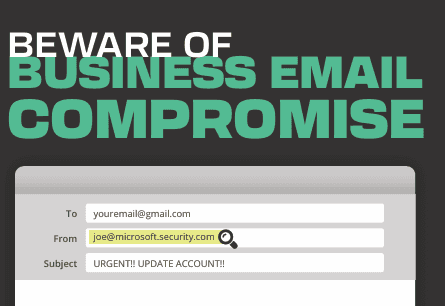
Beware of Business Email Compromise
Learn how to identify and prevent business email compromise attacks that target your organization's financial transactions and sensitive communications.
Download Free
Encryption: Facts & Figures
Essential facts and statistics about encryption technology and its critical role in protecting your organization's sensitive data.
Download Free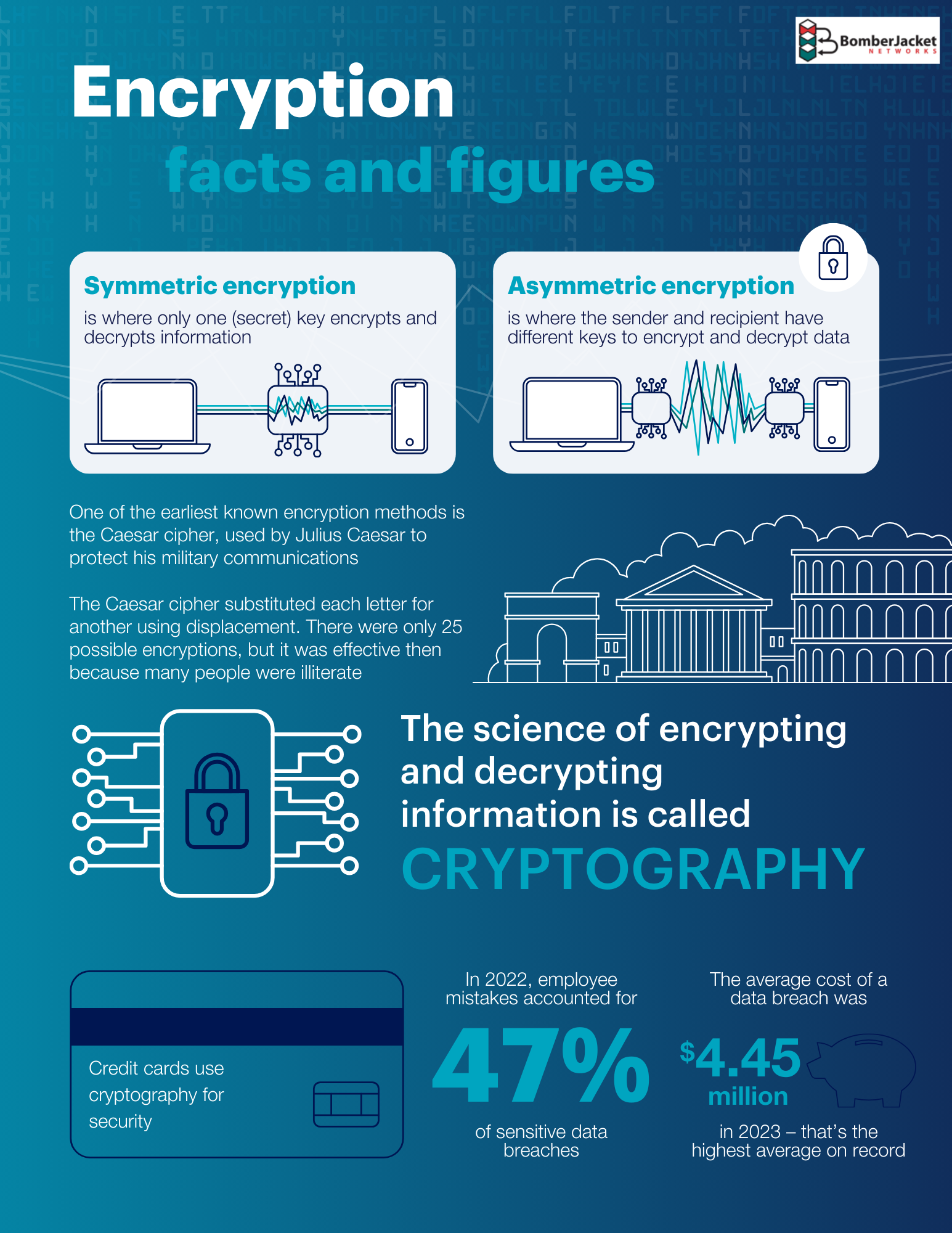
Need Help with Cybersecurity?
BomberJacket Networks is a Minnesota MSP with 25 years of expertise. Protect your business with 24/7 threat monitoring, managed detection and response, and comprehensive security services.