9 IoT Security Threats Every Small Business Needs on Its Radar

Walk through almost any small business today and count the connected devices. Smart thermostats, security cameras, door controllers, printers, TVs in the conference room, sensors on the shop floor. Every one of them is a computer on your network, and most of them were never designed with security as a priority.
That is the uncomfortable truth about the Internet of Things. The convenience is real. So is the risk. Security researchers have consistently found that the majority of IoT devices in the field are vulnerable to medium or high severity attacks, and the bulk of IoT traffic still crosses networks unencrypted. An attacker does not need to break through your firewall if a $40 camera will let them walk in through the side door.
After 25 years of building and securing business networks, here are the nine IoT threats we tell every small business owner to take seriously.
1. Devices that cannot be patched
Flaws show up in IoT firmware constantly, but many devices have no practical way to receive security updates. Some vendors stop shipping patches after a year or two. Some never ship them at all. An unpatchable device is a permanent, known-vulnerable node on your network.
2. Weak or missing security controls
Many IoT devices lack basic protections like encryption for data in transit and at rest. Operational technology often sits on flat networks with no firewalls or filtering between it and everything else, so once malware lands on one device it can spread with nothing in its way.
3. Sensitive data collected without oversight
IoT sensors gather enormous amounts of data, often more than the business realizes. Cameras, voice assistants, and smart displays can capture what is said and done inside your office. If that data is exposed, you are looking at privacy liability and, in some cases, competitive espionage.
4. The home network problem
Hybrid work put company data on employees' home networks, which are dramatically less secure than office networks. Every smart doorbell, gaming console, and off-brand gadget on an employee's home Wi-Fi is now one hop away from the laptop they use for work.
5. Thin regulation, uneven standards
IoT security regulation is still maturing and enforcement is inconsistent. There is no universal baseline forcing manufacturers to build secure devices, which means the burden of vetting and securing them falls on you, the buyer.
6. Default and hard-coded passwords
Entire product lines ship with the same factory credentials, and attackers keep lists of them. A device still running admin/admin is not a vulnerability waiting to be found. It has already been found. Bots scan for these around the clock.
7. No single policy fits every device
An IoT environment mixes devices with wildly different capabilities, data types, and management interfaces. One blanket security policy will not cover a smart lock, a warehouse sensor, and a networked printer. Each class of device needs its own rules, and most small businesses have never written any.
8. Users cannot secure what they do not understand
Security awareness training works, but IoT rarely makes it into the curriculum. Employees generally do not think of a smart TV or a badge reader as a computer that can be hacked, so they never think to question one behaving strangely.
9. Attackers already have a playbook
IoT devices are prime targets for botnet recruitment, DDoS attacks, man-in-the-middle interception, and zero-day exploits. Compromised devices get quietly conscripted into criminal infrastructure, and the owner usually never knows. In industries like healthcare, where connected devices touch patient care, the stakes go beyond data.
What a small business should actually do
None of this means ripping the smart devices out of your building. It means treating them like what they are: computers that need management.
- Inventory everything. You cannot protect a device you do not know exists. Start with a full accounting of what is connected.
- Segment your network. IoT devices belong on their own network segment, walled off from workstations, servers, and financial systems.
- Kill default credentials. Unique, strong passwords on every device, no exceptions.
- Patch on a schedule. Automate firmware updates where possible, and replace devices the vendor has abandoned.
- Assess the risk. A periodic risk assessment that includes IoT, not just servers and laptops, tells you where the real exposure is.
Most small businesses do not have the in-house time or staffing to run this program themselves. That is exactly the gap a managed IT and security partner fills.
BomberJacket Networks has spent more than two decades securing business networks, from Fortune 500 infrastructure to the small businesses that keep local economies running. If you are not sure what is on your network right now, that is the conversation to have. Contact us and we will help you find out.
Related Resources
Free Ebooks & Guides
View All
Ransomware Survival Guide
Essential strategies and best practices to protect your business from ransomware attacks and recover quickly if compromised.
Download Free
All Businesses Should Adopt MFA. Now
Learn why multi-factor authentication is essential for business security and how to implement it across your organization to prevent account takeovers.
Download Free
Inside Threat
Understand and mitigate insider threats with strategies to protect your business from malicious employees, contractors, and accidental data breaches.
Download FreeVisual Guides & Infographics
View All
Cybersecurity Checklist for Data Security and Privacy
A comprehensive checklist to help protect your organization's sensitive data and maintain robust privacy practices.
Download Free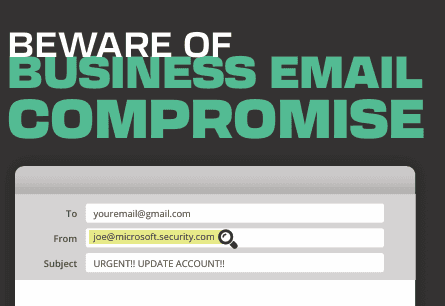
Beware of Business Email Compromise
Learn how to identify and prevent business email compromise attacks that target your organization's financial transactions and sensitive communications.
Download Free
Encryption: Facts & Figures
Essential facts and statistics about encryption technology and its critical role in protecting your organization's sensitive data.
Download Free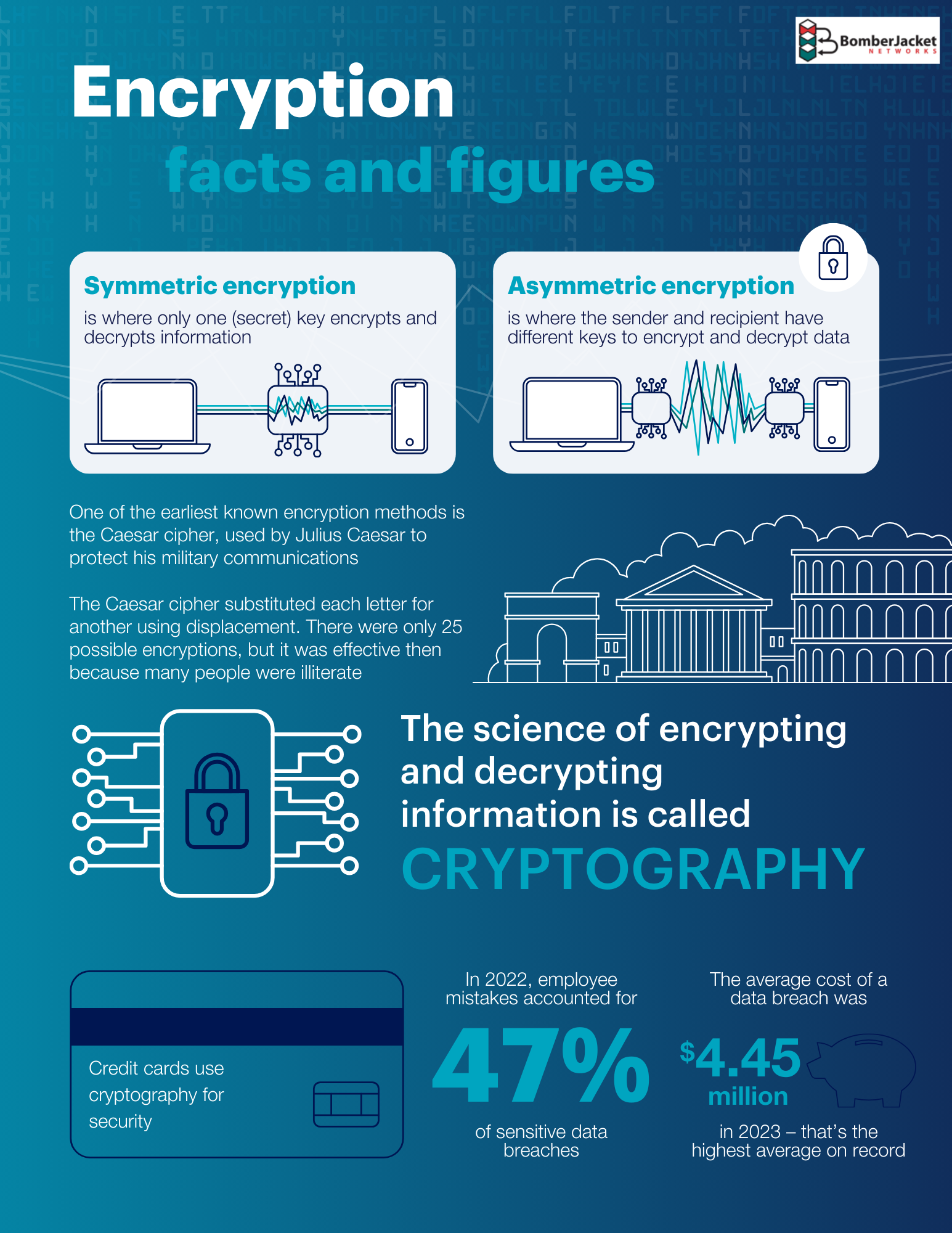
Need Help with Cybersecurity?
BomberJacket Networks is a Minnesota MSP with 25 years of expertise. Protect your business with 24/7 threat monitoring, managed detection and response, and comprehensive security services.